 Bahasa Indonesia
 English
One Line Stops It: Breaking the Cycle of Domestic Violence and Healing Family Trauma – UNY Psychology Students Conduct Community Outreach in Aceh Tamiang
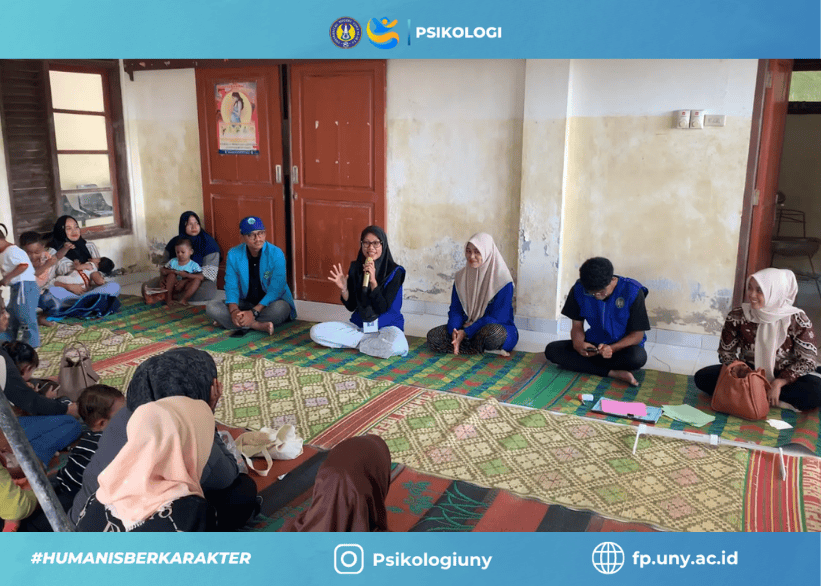
Aceh Tamiang, January 20, 2026 – Students from the Faculty of Psychology, Universitas Negeri Yogyakarta (UNY), participating in the Humanitarian Community Service Program (KKN Kemanusiaan), collaborated with students from Universitas Samudra (UNSAM) to conduct a community outreach activity titled “One Line Stops It: Breaking the Cycle of Domestic Violence and Healing Family Trauma.” The activity was held at the Posyandu Plus of Bukit Panjang Village, Karang Baru District, Aceh Tamiang Regency.
This activity was part of the Humanitarian KKN Program of Group 22, involving students from various disciplines from UNY and UNSAM. The outreach aimed to provide education to the community on the prevention and handling of domestic violence, while also supporting the psychological recovery of families affected by recent flooding. A total of 22 housewives from Bukit Panjang Village participated enthusiastically in the program.
The materials were delivered by two speakers from the KKN team: Ria Adila from the Faculty of Law, Universitas Samudra, and Danella Jasmine from the Faculty of Psychology, UNY. This interdisciplinary collaboration provided complementary perspectives, ranging from legal aspects to psychological approaches in strengthening family resilience. In the first session, Ria Adila explained various forms of domestic violence commonly found in society. She emphasized that domestic violence does not only involve physical abuse but can also occur in the form of psychological and economic violence. She also described the legal steps that victims can take and highlighted the importance of community awareness and courage in seeking help when facing or witnessing cases of domestic violence.
The following session was delivered by Danella Jasmine, who discussed post-disaster mental health recovery. She explained that changes in living conditions after flooding often trigger prolonged stress that can affect family dynamics. During her presentation, participants were invited to recognize signs of post-disaster trauma and understand various emotional and physical responses that may arise. Participants also practiced several simple techniques to help calm themselves and maintain emotional balance in their daily lives. The session was conducted in a warm and interactive atmosphere. Participants not only listened to the presentations but also actively shared their experiences and asked questions regarding the challenges they had faced after the disaster.
“Disasters can also leave emotional wounds that are often invisible. Through this activity, we want to remind everyone that maintaining mental health is just as important as restoring physical conditions after a disaster. When families support one another, the process of recovery and rebuilding becomes stronger,” said Danella. She also appreciated the enthusiasm of the community members who attended the event. According to her, the openness of participants during the discussion indicated that spaces for dialogue regarding mental health and family resilience are highly needed within the community.
This activity is also aligned with the commitment of higher education institutions in supporting the Sustainable Development Goals (SDGs), particularly SDG 5: Gender Equality and SDG 3: Good Health and Well-being. Through this program, the students aimed to raise public awareness about the importance of family protection and mental health as part of the post-disaster recovery process. Through this outreach activity, the students hope that the community will not only gain new knowledge but also develop the courage to support one another in preventing and stopping domestic violence. Participants are also expected to become advocates within their communities in promoting the importance of safe, healthy, and supportive family environments.
This collaborative activity represents a concrete contribution of UNY Psychology students in applying psychological knowledge within society, while also strengthening the role of higher education institutions in supporting sustainable development and social resilience in disaster-affected areas.
Student contributor: Danella Jasmine

Contact Us

Faculty of Psychology
Universitas Negeri Yogyakarta
Colombo Street Number 1
Karangmalang, Sleman, Yogyakarta 55281
Indonesia
Email: humas_fp@uny.ac.id, sekretaris.dekanfp@uny.ac.id
Instagram: @psikologiuny