 Bahasa Indonesia
 English
UNY Psychology Student Provides Psychosocial Support for Children Affected by Floods through the “Recognizing Emotions with the Hope Plant” Program in Aceh Tamiang
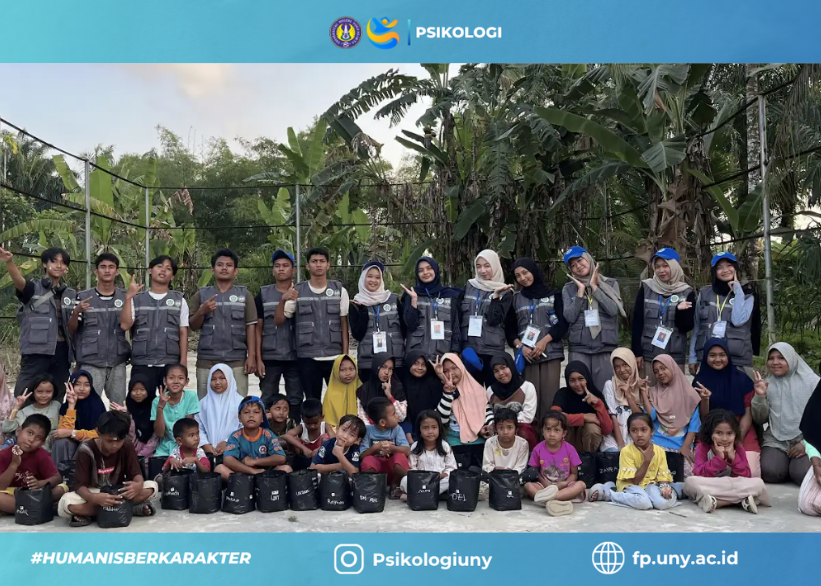
Aceh Tamiang – The floods that struck the Aceh Tamiang region not only caused physical damage but also left psychological impacts on the community, particularly among children. Changes in daily routines, feelings of fear, and difficulties in expressing emotions have become common challenges faced by children after the disaster. In response to this situation, students from the Undergraduate Psychology Study Program at the Faculty of Psychology, Universitas Negeri Yogyakarta (UNY) who participated in the 2026 Humanitarian Community Service Program (KKN Kemanusiaan) in collaboration between Universitas Samudra (UNSAM) and UNY organized psychosocial support activities for children in Teluk Kepayang Village, Bendahara District, Aceh Tamiang Regency.
One of the students involved in this initiative was Sindi Tri Yuliyanti, an undergraduate psychology student from the Faculty of Psychology UNY who participated in the 2026 Humanitarian KKN Collaboration in Teluk Kepayang Village, under the supervision of Dr. Pasca Tri Kaloka, S.Pd., M.Pd. The activity was carried out under the program titled “Recognizing Emotions with the Hope Plant”, which was conducted on January 26, 2026, at the courtyard of the Teluk Kepayang Village Office, involving 31 children as participants.
The activity began with an introduction to several basic emotions such as happiness, sadness, anger, fear, and embarrassment, using flashcard media. Through these materials, the students encouraged children to understand different types of emotions and relate them to situations they experience in their daily lives. This interactive approach was designed to help children feel more comfortable recognizing and expressing their emotions.
Following the emotional recognition session, the children were invited to participate in planting sunflower seeds in prepared polybags. Each child was then given emotion stickers that they could place on the polybags according to the feelings they experienced while taking care of their plants. Through this activity, children not only learned to recognize and express their emotions but also began to rebuild simple daily routines by independently caring for their plants.
Sindi explained that the activity was designed as a simple yet meaningful psychosocial approach for children affected by disasters. “Through planting and caring for the plants, children can learn to recognize their emotions while gradually rebuilding positive daily habits. We hope that this activity can help them feel calmer and regain their motivation after experiencing the disaster,” she stated.
Throughout the activity, the children showed great enthusiasm in participating in each stage of the program. They actively interacted during the emotion recognition session, were excited to plant the sunflower seeds, and confidently placed emotion stickers on their respective polybags. The plants they nurtured also served as symbols of hope, reminding them that recovery can grow gradually over time.
This activity provided positive impacts for the children in recognizing and expressing their emotions in a healthier way. In addition, the activity helped establish new routines that supported children in regaining a sense of safety and empowerment after the disaster.
Through this program, students from the Faculty of Psychology at Universitas Negeri Yogyakarta demonstrated their contribution to supporting psychosocial recovery in disaster-affected communities while strengthening the role of higher education institutions in community service. The activity also aligns with the Sustainable Development Goals (SDGs), particularly SDG 3: Good Health and Well-being and SDG 4: Quality Education, by supporting mental health and sustaining the learning processes of children in disaster-affected areas.



Contact Us

Faculty of Psychology
Universitas Negeri Yogyakarta
Colombo Street Number 1
Karangmalang, Sleman, Yogyakarta 55281
Indonesia
Email: humas_fp@uny.ac.id, sekretaris.dekanfp@uny.ac.id
Instagram: @psikologiuny