 Bahasa Indonesia
 English
Faculty of Psychology UNY Students Promotes Clean and Healthy Living Habits through DARMA WIJI Program
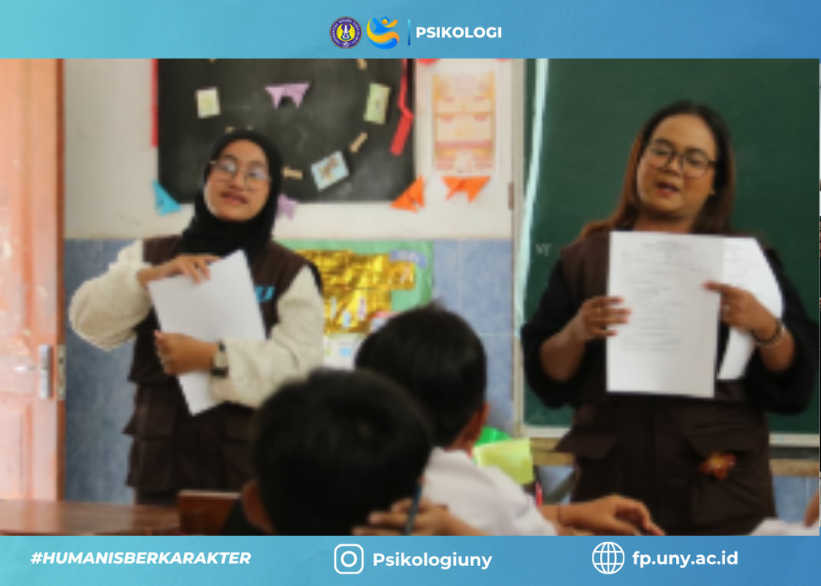
The Faculty of Psychology, Universitas Negeri Yogyakarta (UNY), continues to encourage student involvement in community-oriented activities through the implementation of DARMA WIJI. Held at Tanjung Elementary School, Kempong Elementary School, and Kanisius Promasan Elementary School, the program focused on promoting Clean and Healthy Living Behaviors (Perilaku Hidup Bersih dan Sehat/PHBS) among elementary school students through education on proper handwashing and toothbrushing practices.
Involving students from grades 1 to 6, DARMA WIJI was designed as a health education program that emphasized not only the delivery of information but also hands-on learning experiences. The PPK Ormawa team, together with Agenpsy volunteers, organized a series of activities including an interactive opening session, a pre-test, educational sessions, learning games, creative activities, demonstrations, and hands-on practice. This approach provided students with both knowledge and practical experience in adopting clean and healthy living habits.
The program began with an introduction to the team and an explanation of the objectives of the activity. Before the educational session, students completed a pre-test to assess their initial knowledge of clean and healthy living behaviors. They then learned about the importance of handwashing and maintaining dental and oral health, appropriate times to wash their hands and brush their teeth, and the correct steps for carrying out these practices. The materials were delivered through simple questions and discussions using examples closely related to the students’ everyday activities.
The educational activities were adapted to the students’ developmental stages and grade levels. Students in grades 1, 2, and 3 participated in handwashing-themed coloring activities and created a simple teaching aid called the “cavity hippo” to introduce the importance of maintaining dental health. Meanwhile, students in grades 4, 5, and 6 worked in groups to create handwashing-themed posters and wall magazines illustrating the proper steps for brushing teeth. These activities provided students with opportunities to review the materials while developing their creativity and teamwork skills.
Student participation was further encouraged through a handprint activity on the DARMA WIJI banner, followed by live demonstrations of proper handwashing and toothbrushing techniques. After observing each step demonstrated by the team, the students were invited to practice the techniques together. Their enthusiasm was evident throughout the program, as they actively answered questions, participated in demonstrations and discussions, and took part in short quizzes.
At the end of the program, the team reinforced the importance of making handwashing and toothbrushing part of students’ daily routines. Students also received booklets or toothbrushing calendars to help remind them to maintain their toothbrushing routines. Rewards were provided as a form of appreciation for students who actively participated in the activities.
DARMA WIJI contributes to the achievement of the Sustainable Development Goals (SDGs), particularly SDG 3: Good Health and Well-being and SDG 4: Quality Education. Through health education provided at the elementary school level, the program supports the development of knowledge and practical skills related to personal health and well-being. At the same time, the use of interactive, creative, and age-appropriate learning methods contributes to meaningful and participatory educational experiences.
Through DARMA WIJI, the Faculty of Psychology UNY supports the role of students in contributing to the community through educational initiatives. Collaboration among the PPK Ormawa team, Agenpsy volunteers, teachers, and students plays an important role in creating a school environment that encourages the development of clean and healthy living habits. The program is expected to go beyond the knowledge gained during the activities and encourage students to consistently practice proper handwashing and toothbrushing as part of their everyday lives.

Contact Us

Faculty of Psychology
Universitas Negeri Yogyakarta
Colombo Street Number 1
Karangmalang, Sleman, Yogyakarta 55281
Indonesia
Email: humas_fp@uny.ac.id, sekretaris.dekanfp@uny.ac.id
Instagram: @psikologiuny