 Bahasa Indonesia
 English
Enhancing Environmental Sanitation and Preventing Dengue: PPK Ormawa BEM KM Psychology UNY Launches the "1 House 1 Jumantik" DARMA BUMI Program in Kulon Progo
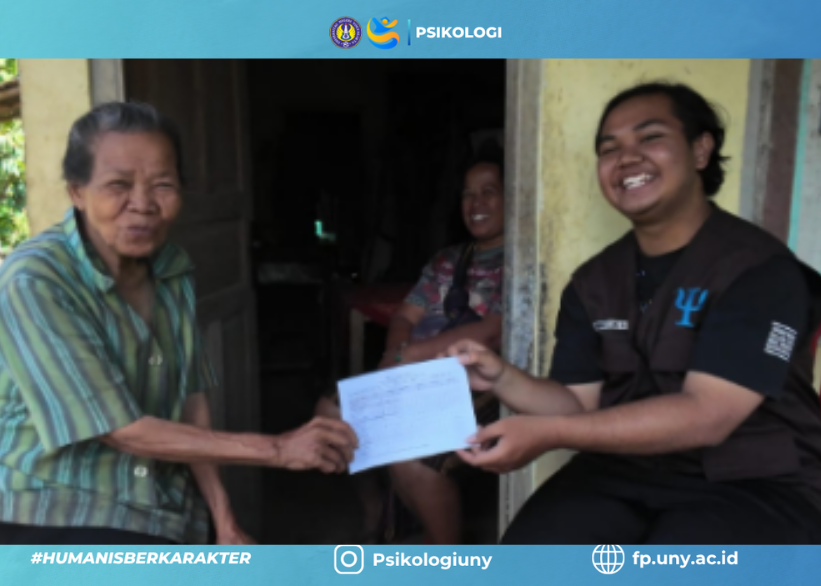
KULON PROGO, UNY – Demonstrating a concrete commitment to the higher education tridharma, specifically community service, the Student Capacity Enhancement Program (PPK Ormawa) team from BEM KM Psychology at Universitas Negeri Yogyakarta (UNY) 2026 executed an environmental health initiative titled DARMA BUMI. This program took place in Duren Sawit Hamlet, Banjaroyo Village, Kalibawang District, Kulon Progo Regency. The DARMA BUMI program was strategically designed to address the threat of Dengue Hemorrhagic Fever (DHF) through a community-based empowerment approach. Centered on the slogan "1 House 1 Jumantik" (Larvae Inspection Monitor), students partnered with Agenpsy volunteers, local health cadres, and residents to foster a sustainable, self-driven dengue prevention routine starting from the individual household level.
Participatory Approach and Community Cleanliness Drive
The execution of DARMA BUMI extended beyond one-way information dissemination, prioritizing active participation from all community elements. The initiative began with intensive coordination alongside health cadres and local leaders to align goals and map areas prone to water stagnation. Following the coordination phase, student teams, Agenpsy volunteers, and local residents conducted a communal cleanup (gotong royong) across residential areas in Duren Sawit Hamlet. The primary focus was identifying and inspecting water storage containers and potential breeding sites for Aedes aegypti mosquitoes, both inside homes and in surrounding yards.
In addition to improving sanitation, this joint effort strengthened social ties, revived community solidarity, and heightened collective awareness regarding environmental health. Innovation Through the "1 House 1 Jumantik" Self-Monitoring Checklist A core innovation of the DARMA BUMI program was the distribution and implementation of the Self-Monitoring Larvae Checklist Form. Through this tool, each head of household is empowered to act as the primary larvae monitor (Jumantik) for their own home. The checklist guides families to regularly inspect, track, and evaluate potential larvae sites that are often overlooked, such as bathroom tubs, water dispenser trays, flowerpot saucers, and pet water bowls. Direct guidance was provided on identifying larvae-infested water and taking immediate corrective measures (draining, covering, and recycling). Through this mechanism, residents transitioned from passive information recipients to active community health agents. Direct Contributions to the Sustainable Development Goals (SDGs)
The implementation of DARMA BUMI by PPK Ormawa BEM KM Psychology UNY 2026 directly supports key targets of the Sustainable Development Goals (SDGs):
- SDG 3: Good Health and Well-being: The program aids in interrupting vector-borne disease transmission (Dengue) through early larvae detection and the promotion of clean living behaviors at the household level.
- SDG 11: Sustainable Cities and Communities: By fostering community-led sanitation and cleanup drives, DARMA BUMI creates safer, more resilient, and healthier rural residential environments.
- SDG 17: Partnerships for the Goals: The initiative establishes multi-stakeholder collaboration among higher education institutions (UNY students and academics), youth organizations (Agenpsy), village administration, health cadres, and the local Banjaroyo community to address regional health challenges.
Sustainable Impact and Future Outlook
For UNY students, DARMA BUMI offered valuable field experience in understanding rural social dynamics and local wisdom. This direct engagement honed the students' soft skills in managing community interventions while deepening their social empathy. By reinforcing routine and independent larvae monitoring, DARMA BUMI aims to create a lasting mindset shift among Banjaroyo residents. Starting with one household, one shared responsibility, and consistent collective action, a healthier and dengue-free environment can be achieved sustainably.

Contact Us

Faculty of Psychology
Universitas Negeri Yogyakarta
Colombo Street Number 1
Karangmalang, Sleman, Yogyakarta 55281
Indonesia
Email: humas_fp@uny.ac.id, sekretaris.dekanfp@uny.ac.id
Instagram: @psikologiuny