 Bahasa Indonesia
 English
Faculty of Psychology UNY Strengthens Impactful Learning through a Case-based Learning Optimization Workshop
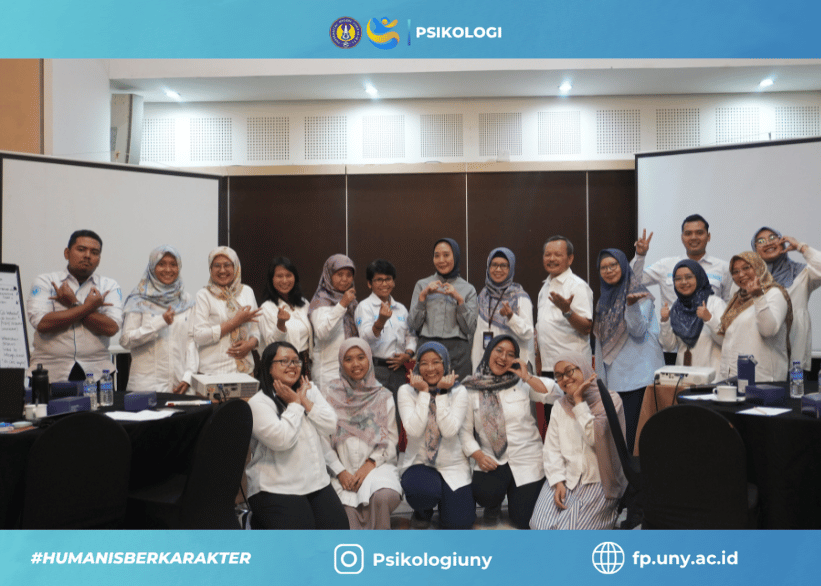
Yogyakarta – The Faculty of Psychology at Universitas Negeri Yogyakarta (UNY) reaffirmed its commitment to enhancing the quality of higher education by organizing the Workshop on Optimizing Case-based Learning (CBL) for Impactful Learning on Monday, July 27, 2026, at UNY Hotel, Yogyakarta. Held from 8:30 a.m. to 3:15 p.m., the workshop brought together faculty members to strengthen their capacity in designing and implementing contextual, student-centered, and impactful learning experiences.
The workshop was officially opened by Dr. Siti Rohmah Nurhayati, M.Si., Dean of the Faculty of Psychology UNY, who emphasized the importance of transforming teaching and learning practices to better prepare graduates for the challenges of professional practice and contemporary society. In her opening remarks, she highlighted that higher education should not only equip students with theoretical knowledge but also cultivate critical thinking, problem-solving abilities, collaboration, and evidence-based decision-making skills.
She further explained that Case-based Learning (CBL) offers an effective pedagogical approach by bridging theoretical concepts with authentic professional experiences. Through carefully designed cases, students are encouraged to analyze complex psychological issues, evaluate alternative solutions, and develop practical competencies that are essential for future psychologists, researchers, educators, and practitioners. The keynote session featured Theresia Novi Poespita Candra, M.Si., Ph.D., Psychologist, a lecturer from the Faculty of Psychology, Universitas Gadjah Mada, as the invited speaker. The session was moderated by Dr. Annisa Reginasari, M.A., and was conducted in an interactive format that encouraged participants to exchange ideas, discuss teaching experiences, and explore practical strategies for integrating CBL into psychology courses.
During her presentation, the speaker introduced the fundamental principles of Case-based Learning as a student-centered instructional approach that promotes active engagement and higher-order thinking. She discussed the characteristics of authentic psychological cases, emphasizing the importance of using real-world scenarios that reflect professional practice and encourage students to connect psychological theories with practical applications.
Participants also explored methods for designing assessments aligned with CBL principles, including strategies for facilitating meaningful case discussions, encouraging collaborative learning, and evaluating students' analytical and reflective thinking. In addition, the workshop addressed practical approaches for integrating Case-based Learning into the Semester Learning Plan (Rencana Pembelajaran Semester/RPS), ensuring that learning outcomes, classroom activities, and assessment methods are cohesively aligned. Following the presentation, participants engaged in an active discussion and question-and-answer session. Faculty members shared experiences and raised questions regarding the implementation of CBL across different psychology courses, the development of discipline-specific cases, and assessment strategies capable of measuring students' higher-order cognitive skills.
After the lunch break, the workshop continued with a collaborative discussion session for lecturers responsible for teaching courses in the Odd Semester of the 2026/2027 Academic Year, facilitated by Dr. Suwarjo, M.Si. During this session, participants worked together to develop course assignments, authentic case scenarios, and assessment rubrics tailored to their respective courses. The collaborative design process aimed to ensure that CBL could be effectively embedded into the curriculum and implemented consistently across the faculty. Through this workshop, the Faculty of Psychology UNY expects Case-based Learning to become an integral component of its teaching practices rather than merely a theoretical concept. By incorporating authentic case analysis into classroom activities, students are expected to gain richer learning experiences that foster critical thinking, reflective practice, communication skills, teamwork, and evidence-based problem-solving.
The workshop also reflects the Faculty's continuous commitment to educational innovation and curriculum development that responds to the evolving needs of society, the psychology profession, and the rapidly changing world of work. By strengthening lecturers' pedagogical competencies, the Faculty seeks to produce graduates who are not only academically competent but also adaptable, ethical, and capable of making meaningful contributions to society. Furthermore, the event highlighted the importance of inter-university collaboration through the participation of an expert from Universitas Gadjah Mada. Such academic partnerships provide valuable opportunities for sharing best practices, exchanging knowledge, and fostering continuous improvement in psychology education in Indonesia.
The Workshop on Optimizing Case-based Learning for Impactful Learning contributes to several United Nations Sustainable Development Goals (SDGs). Most notably, it supports SDG 4: Quality Education by enhancing lecturers' competencies in implementing innovative, student-centered, and impactful teaching practices that improve learning outcomes. The workshop also advances SDG 17: Partnerships for the Goals by strengthening academic collaboration between the Faculty of Psychology at Universitas Negeri Yogyakarta and the Faculty of Psychology at Universitas Gadjah Mada, promoting the exchange of expertise and best practices to improve the quality of higher education in Indonesia.

Contact Us

Faculty of Psychology
Universitas Negeri Yogyakarta
Colombo Street Number 1
Karangmalang, Sleman, Yogyakarta 55281
Indonesia
Email: humas_fp@uny.ac.id, sekretaris.dekanfp@uny.ac.id
Instagram: @psikologiuny