 Bahasa Indonesia
 English
UNY Faculty of Psychology Strengthens LPTK Networks through KONASPI XII in Bali
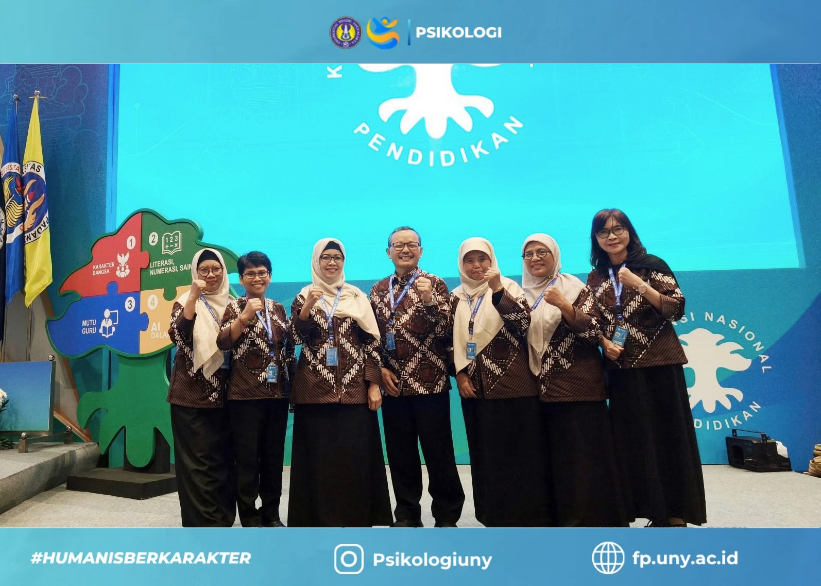
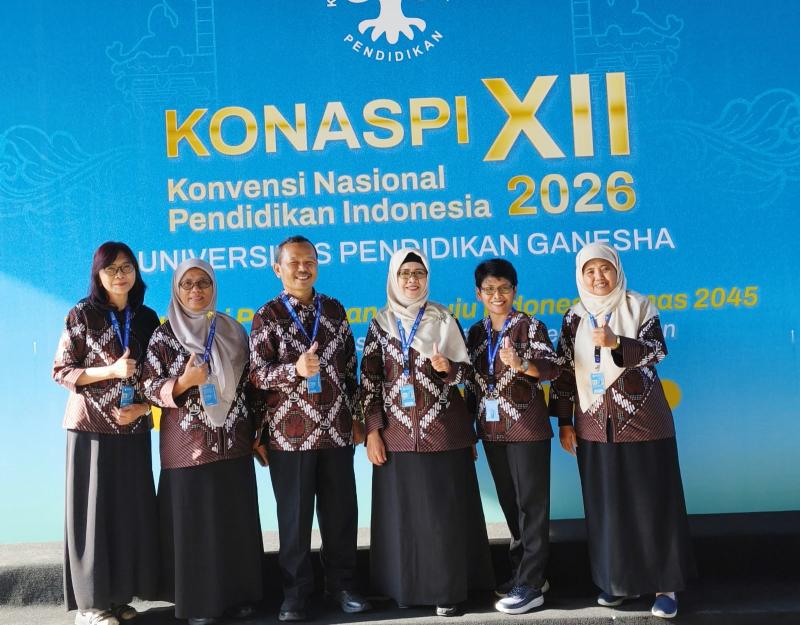
BALI, 2–4 October 2026 — The Faculty of Psychology, Universitas Negeri Yogyakarta (UNY) participated in the 12th National Convention on Indonesian Education (Konvensi Nasional Pendidikan Indonesia/KONASPI XII), held at the Bali Nusa Dua Convention Center (BNDCC), Bali, from 2 to 4 October 2026. The Faculty was represented by the Dean, Vice Dean, and members of the Faculty Senate, joining university leaders and academic representatives from Teacher Education Institutions (Lembaga Pendidikan Tenaga Kependidikan/LPTK) across Indonesia. KONASPI XII provided a strategic platform for exchanging perspectives on educational transformation in the context of rapid developments in digital technology and Artificial Intelligence (AI). These developments create significant opportunities for teaching, research, and educational services, while simultaneously presenting new challenges related to human resource readiness, ethical technology use, digital literacy, and the capacity of individuals and institutions to adapt to an increasingly complex environment.
From a psychological perspective, educational transformation is closely connected to human development. Education should not be limited to academic achievement, but should also foster character development, critical thinking, self-regulation, creativity, psychological resilience, collaboration, and the ability to navigate increasingly complex social and technological environments. In this context, psychology has an important contribution to make in ensuring that educational transformation remains human-centred and supports the development of individuals in a holistic manner. One of the significant outcomes of KONASPI XII was the formulation of the Bali Recommendations, which addressed several strategic priorities for the future of Indonesian education. These included strengthening educational character and philosophy, improving foundational learning, reinforcing Teacher Education Institutions and teacher professional education, and advancing inclusive and sustainable digital and AI transformation. The recommendations also highlighted the continuing relevance of Pancasila and the educational philosophy of Ki Hadjar Dewantara as important foundations for responding to contemporary educational challenges.
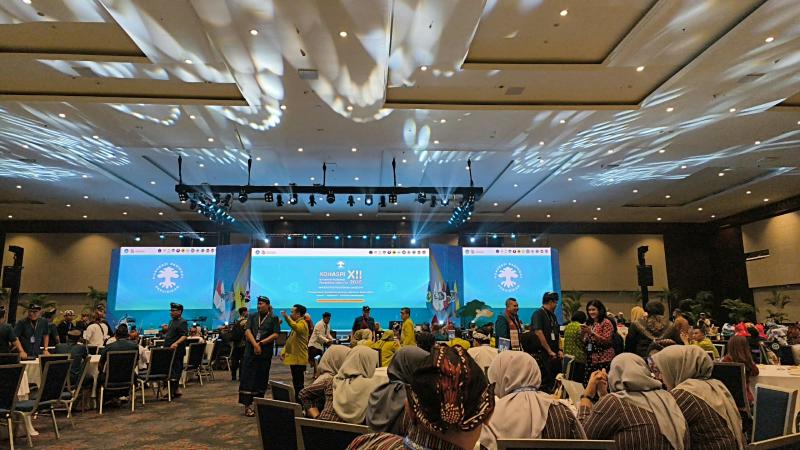
For the Faculty of Psychology UNY, participation in the convention provided an important opportunity to broaden academic perspectives while strengthening connections with higher education institutions and educational stakeholders. Engagement with academics, university leaders, and education practitioners from different regions created opportunities to exchange knowledge and experiences concerning educational practices, research, human resource development, and the responsible application of technology. Such networks are increasingly important for developing meaningful academic collaboration and strengthening the contribution of psychological science to education and society.
The involvement of the Faculty Senate further strengthened the institutional and academic dimension of the Faculty’s participation. As an important element in the development of academic life and scholarly governance, the Faculty Senate’s engagement in a national forum such as KONASPI XII contributes to broadening institutional perspectives on strategic issues affecting higher education. This perspective is expected to support the continued development of academic directions and institutional policies that remain responsive to both national priorities and global developments. For the Faculty of Psychology UNY, strengthening the integration of education, research, and community engagement is also essential in responding to contemporary challenges. Psychological science must continue to address human and societal issues through evidence-based approaches while generating innovations that can be applied across educational, organisational, community, and social contexts. Digital technologies and AI should therefore be positioned as tools that enhance human development and academic processes, rather than replacing the human dimension that lies at the heart of education.
The Faculty’s participation in KONASPI XII also reflects its commitment to the Sustainable Development Goals (SDGs), particularly SDG 4 on Quality Education through the advancement of relevant and high-quality education, SDG 9 on Industry, Innovation and Infrastructure through responsible innovation and technological development, and SDG 17 on Partnerships for the Goals through stronger institutional collaboration and academic networks. These commitments are aligned with the Faculty’s broader efforts to advance psychology education and scholarship that are academically rigorous, adaptive, innovative, and grounded in human-centred values.
Through its participation in KONASPI XII, the Faculty of Psychology UNY reaffirmed its role as an active member of the academic community in responding to the transformation of Indonesian education. The convention served not only as a platform for knowledge exchange and network development, but also as an opportunity to reflect on the contribution of psychology to an educational system capable of nurturing human potential in its fullest sense. By strengthening collaboration among faculties, study programmes, universities, and broader stakeholders, the Faculty of Psychology UNY continues to promote psychological education and scholarship that respond to future challenges, advance scientific development, and ultimately place human beings at the centre of educational transformation.



Contact Us

Faculty of Psychology
Universitas Negeri Yogyakarta
Colombo Street Number 1
Karangmalang, Sleman, Yogyakarta 55281
Indonesia
Email: humas_fp@uny.ac.id, sekretaris.dekanfp@uny.ac.id
Instagram: @psikologiuny