 Bahasa Indonesia
 English
Addressing Emotional Fatigue among High School Guidance and Counseling Teachers in Kulon Progo: Promoting Educator Well-being
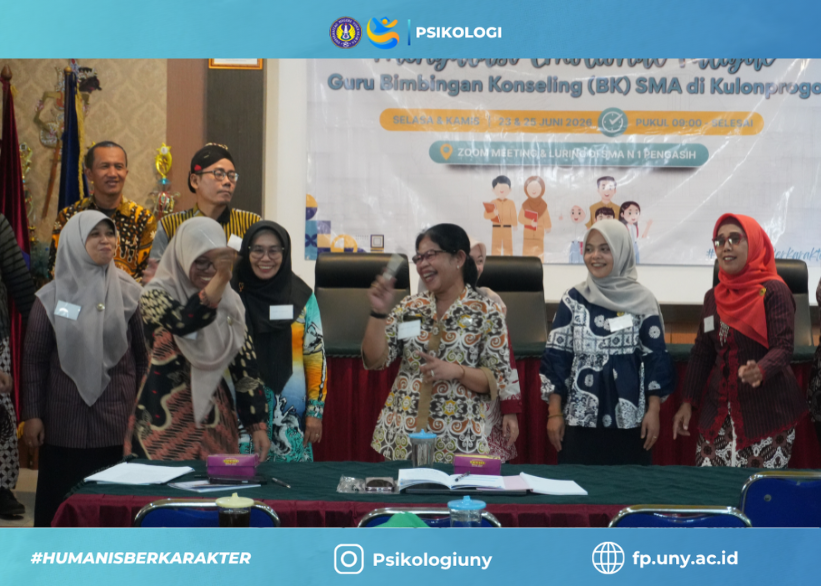
Guidance and Counseling (GC) teachers play a vital role in promoting students' academic, personal, social, and emotional development. Every day, they serve as active listeners, counselors, mentors, and trusted adults who support students in navigating various life challenges. While fulfilling these responsibilities, GC teachers are frequently exposed to emotionally demanding situations that require continuous empathy, patience, and professional commitment.
The cumulative emotional demands of providing ongoing support to students place GC teachers at considerable risk of experiencing emotional fatigue, a condition characterized by emotional exhaustion resulting from prolonged exposure to others' psychological distress and high occupational demands. If left unaddressed, emotional fatigue may negatively affect teachers' psychological well-being, reduce the quality of counseling services, and ultimately influence the overall educational environment.
As part of the implementation of the Tri Dharma of Higher Education, particularly in the area of community engagement, the Community Service Team from the Faculty of Psychology, Universitas Negeri Yogyakarta (UNY), organized a community service program entitled "Addressing Emotional Fatigue among Senior High School Guidance and Counseling Teachers in Kulon Progo." The program was led by Dr. Suwarjo, M.Si., together with A'yunin Akrimni Darojat, M.Psi., Psychologist, and Ika Wahyu Pratiwi, M.Psi., Psychologist, with active participation from graduate and undergraduate psychology students. Their involvement reflects UNY's commitment to integrating academic expertise, student learning, and community service in addressing real-world psychological challenges.
The training program was conducted over two sessions to maximize participant engagement and learning outcomes. The first session was held online on 23 June 2026, followed by an in-person workshop on 25 June 2026 at SMA Negeri 1 Pengasih, Kulon Progo Regency. The participants consisted of Guidance and Counseling teachers who are members of the High School Guidance and Counseling Teachers Association (MGBK) throughout Kulon Progo.
The event commenced with welcoming remarks from Mr. Sutardi, S.Psi., M.Pd., Chair of the Kulon Progo MGBK Association, who emphasized the importance of prioritizing counselors' mental health as an essential component of quality educational services. The opening remarks were followed by A'yunin Akrimni Darojat, M.Psi., Psychologist, who highlighted that maintaining teachers' psychological well-being is not merely an individual responsibility but also a strategic investment in fostering healthier, more supportive, and more inclusive school environments.
Throughout the training, participants explored the concept of emotional fatigue, including its causes, warning signs, psychological consequences, and practical approaches for prevention and recovery. Rather than relying solely on lectures, the program emphasized experiential learning by encouraging participants to practice evidence-based psychological strategies designed to strengthen resilience and promote long-term well-being.
The workshop introduced several practical approaches, including self-care, which encourages intentional physical and psychological well-being; grounding techniques, which help individuals regulate stress and remain present during emotionally challenging situations; and peer support, where participants engaged in meaningful conversations, mutual reflection, and emotional support with fellow counseling teachers.
Among all activities, the peer support session emerged as the most memorable and impactful component of the program. In an atmosphere characterized by openness, trust, and empathy, participants shared personal experiences and professional challenges encountered while supporting students dealing with mental health concerns, family conflicts, bullying, academic pressure, and various psychosocial issues. The enthusiasm of the participants exceeded expectations, leading to an extension of the session as many teachers appreciated the rare opportunity to openly express their experiences while receiving understanding and encouragement from colleagues facing similar professional realities.
The program demonstrated that investing in counselors' psychological well-being directly contributes to improving the quality of counseling services within schools. Teachers who maintain good mental health are better equipped to establish positive relationships with students, provide effective counseling interventions, foster emotionally safe learning environments, and support students' holistic development.
Furthermore, this community engagement initiative contributes to the achievement of several United Nations Sustainable Development Goals (SDGs). It directly supports SDG 3: Good Health and Well-being by promoting mental health awareness and psychological well-being among educators. It also advances SDG 4: Quality Education, recognizing that mentally healthy teachers are fundamental to delivering high-quality educational and counseling services that support student success. Moreover, the collaboration among Universitas Negeri Yogyakarta, the Kulon Progo Guidance and Counseling Teachers Association (MGBK), and SMA Negeri 1 Pengasih reflects the spirit of SDG 17: Partnerships for the Goals, demonstrating how partnerships between higher education institutions, schools, and professional organizations can generate sustainable impacts on educational quality and community well-being.
The Faculty of Psychology, Universitas Negeri Yogyakarta, extends its sincere appreciation to the Kulon Progo Guidance and Counseling Teachers Association (MGBK) for its valuable collaboration and to SMA Negeri 1 Pengasih for generously hosting and facilitating the program. It is hoped that this partnership will continue through future community engagement initiatives that strengthen teachers' professional competence and psychological well-being, ultimately contributing to more resilient educators, higher-quality counseling services, healthier school communities, and the development of future generations who are psychologically healthy, resilient, and prepared to thrive in an increasingly complex world.

Contact Us

Faculty of Psychology
Universitas Negeri Yogyakarta
Colombo Street Number 1
Karangmalang, Sleman, Yogyakarta 55281
Indonesia
Email: humas_fp@uny.ac.id, sekretaris.dekanfp@uny.ac.id
Instagram: @psikologiuny